The First Nations Health Authority (FNHA) would like to thank Kecia Larkin for sharing her deeply personal and inspiring story to help promote knowledge and understanding during Indigenous Aids Awareness Week (Dec. 1-7).Warning: This story contains discussions of sexual abuse, substance use, and trauma caused by racism and mistreatment of a child. Readers may find the words distressing.
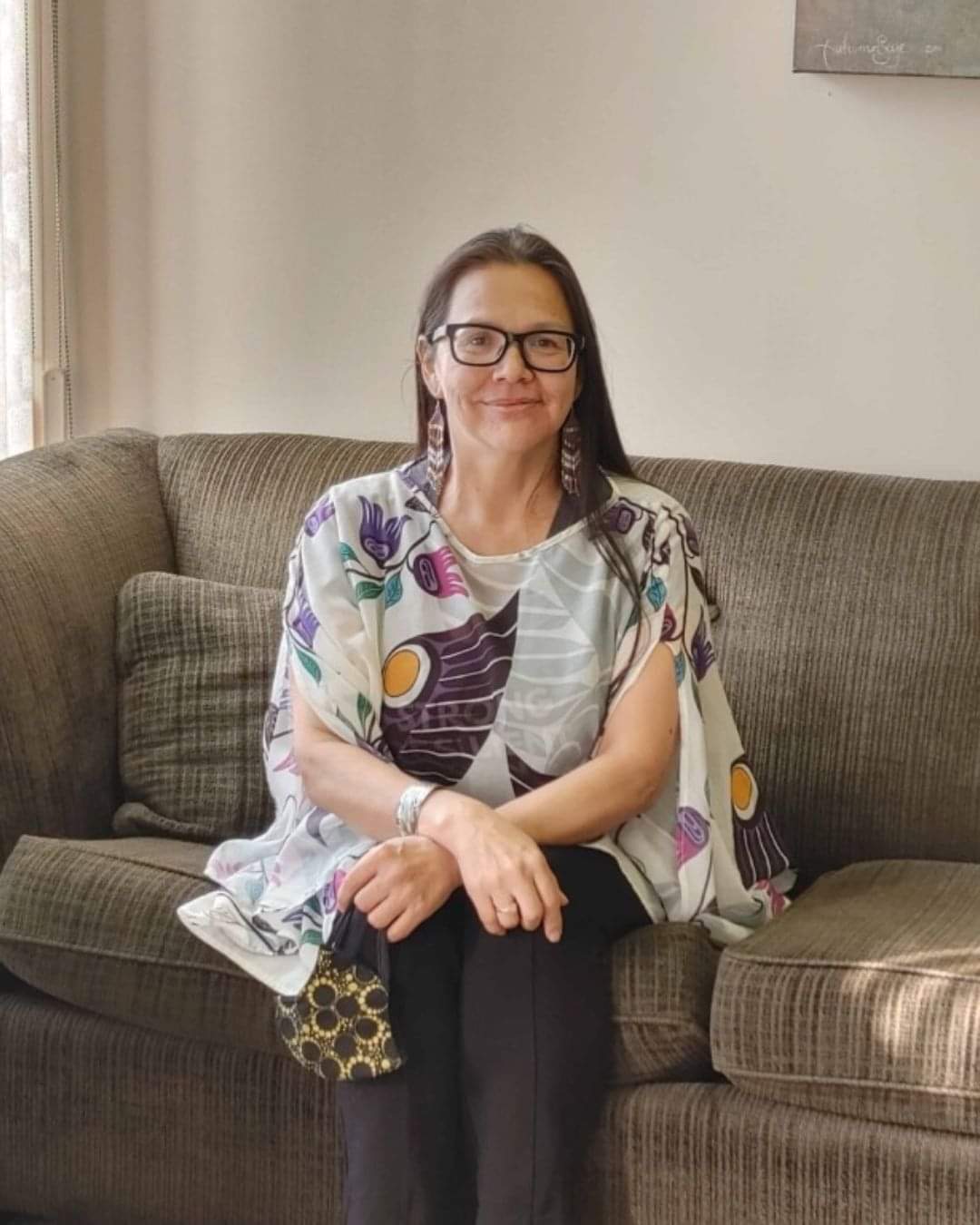
To see Kecia Larkin today is to look at a strong Indigenous woman, and a powerful advocate for those living with HIV. A proud mother of two, she speaks confidently and passionately about her life's work devoted to HIV education and advocacy. As she tells her life story, however, there is still a child within, one who remembers long days of sadness and pain.
With ties to the Kwa'Kwa'ka'wakw and Piikani Nations of Vancouver Island and Alberta, respectively, Kecia grew up disconnected from her culture, yet she was treated with racism for her ethnicity. Forced to go to a municipal school in Alert Bay run by former Indian Residential School teachers, Kecia was subjected to physical violence and corporal punishments.
After learning about this, Kecia's mother quickly withdrew her from the school and sent her to live with her grandparents in Victoria. Although she found a safe school, her difficulties continued.
“I experienced a lot of unwanted sexual behaviors from other kids and adults," recalls Kecia. “It wasn't something we ever had to deal with before. It was completely traumatizing. I didn't really have a good sense of who I was."
Kecia's experiences made it difficult to navigate everyday life, leading to the erosion of her self-worth.
“I didn't do well in school and not just from trauma and depression, but I also had undiagnosed ADHD back then. It ate away at my self-esteem. I became very angry and just kind of gave up on everything."
By 15, Kecia moved to live with some family in Vancouver. After some time, she could no longer stay with family but refused to return home due to the lack of mental health and trauma supports available. Kecia spent the ages of 16-19 as a ward of the court. During that time, she found herself immersed in street culture. When she aged out of care, she found a community on Hastings Street that accepted her.
“There were a lot of Indigenous people [on Hastings Street]," she recalls. “In the '80s it wasn't like it is now. It was very different. There was community there. I didn't feel unsafe, but eventually I fell in with the wrong crowd.
After a severe traumatic experience, Kecia began using heavier drugs, to cope and survive. With addiction, coupled with insecure housing and income, Kecia was sexually exploited. In 1988, Kecia was in a vulnerable situation, she became involved with an older man who promised to help her "get clean." Instead, she says they fell deeper into substance use.
“I didn't know this at the time, but he was HIV positive," she recalls.
At the time, there were no laws requiring disclosure. She only learned the truth during a hospital visit after a workplace accident, when a nurse gently told her: “Do you know that he's HIV positive?"
That moment changed her life forever.
Over the years she lived in the Downtown Eastside, she saw other people with HIV who were dying. Due to public fear and misconceptions about the disease, she witnessed stigma grow. “Nobody would touch them," she recalls. “Nobody would touch anything that they had. It was an insight into stigma and what I would be facing when people found out."
After checking herself into detox, she reconnected with her mother and family and returned home to begin her healing. She says her family didn't treat her any differently, despite her HIV+ diagnosis.
“I was just Kecia—their granddaughter, niece and cousin. They were just happy to see me home. I remember not really wanting the family to know at first. When I told them I was HIV positive, everyone shared how they felt and there was no difference. They just loved me. It was hard for me to love myself."
That love sparked a transformation toward advocacy for people living with HIV. She wanted others to feel that same acceptance and love that her family had shown her. Partnering with Métis physician Dr. Jay Wortman, Kecia began sharing her story. She talked about her lived and living experiences with HIV, while Dr. Wortman shared from a medical perspective.
“People started requesting me to go to their communities because I wasn't a gay white man, I was a brown female. I became the first woman in Canada to publicly disclose my HIV status."
Educating young people became a core mission. From her own experience, she saw how many young people are drawn to urban life, and she sought to protect them by raising awareness about HIV and other risks. Kecia became a national voice for Indigenous people living with HIV, traveling across Canada with one goal in mind: “If I was in a whole room of people and I could reach one person, I did my job."
Today, Kecia is a respected HIV advocate and Knowledge Keeper with FNHA's Community Wellness Initiative, continuing her advocacy for education and visibility of people living with HIV. While HIV care has advanced, stigma and health disparities persist, making her job as important as ever.
Kecia's vision for the future is rooted in collaboration and culture.
“I would love to see people learning more of the basics again, like 'HIV 101'. I'd like to see more relationship building, not just with our Indigenous people but with other communities like the African, Caribbean, Black communities. We can change a lot of things when we work together."
And for Indigenous people, Kecia says that access to traditional medicines, food, land, and community circles creates “a formidable, fearless spirit that speaks up and stands in their power."
Kecia's story is one of survival, resilience and leadership. She wants newly diagnosed people to see that there is hope: “I want people to see us long-term survivors. HIV is a part of who you are, but it does not define you."