May 7, 2018
Q & A with Janine Stevenson, CD Nurse Specialist and Manager of the Indigenous Wellness Team (IWT)
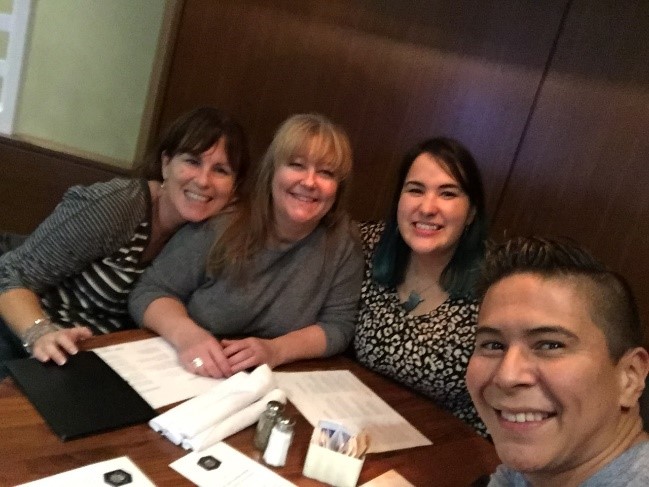
(L-R: Indigenous Wellness Team: Andrea Derban, Janine Stevenson, Andrea Medley, Len Pierre.)
Prior to joining FNHA, Janine worked as a street nurse for 17 years in Vancouver’s Downtown Eastside and developed and taught public health workshops with Chee Mamuk, a BC Aboriginal HIV/STBBI program. She holds a Master of Science in Nursing and has facilitated workshops for nurses and other healthcare professionals about sexual health, harm reduction and addiction with the BC Centre for Disease Control. In 2015 Janine joined the FNHA where she supports nurses and First Nations community members who provide sexual health and harm reduction services to First Nations people.
Q: Who is the Indigenous Wellness Team (IWT) and how has it responded to the opioid crisis?
The Indigenous Wellness Team (IWT) is a superb resource for community members and nurses. The team visits community and facilitates the difficult, complex conversations about addiction and overdose that need to happen in order to have real, lasting impact for communities struggling with overdose. In the last 12 months, the Indigenous Wellness team has facilitated 59 presentations in communities across BC on Decolonizing Addiction and Indigenizing Harm Reduction; 36 of these included Naloxone training.
Q: What is next for the Indigenous Wellness team (IWT)?
Moving forward, IWT is working on supporting community champions by building a greater understanding of addiction, substance use, and harm reduction at the community level. We are now hosting a new workshop called ‘Not Just Naloxone: Talking about Substance Use in Indigenous Communities’ (NJN). This three-day ‘train-the-trainer’ workshop supports participants in developing community-based strategies to discuss these topics through the lens of cultural safety and trauma-informed care. IWT has hosted four NJN trainings and counting as we bring the training to each region.
Q: What would you tell someone who wants to learn more about addiction?
Read the one-page fact sheets created by the Indigenous Wellness team! These harm reduction resources debunk the myths of addiction and have been incredibly popular with both health care professionals and community members that want to learn the facts of addiction and reduce stigma. We also have a fact sheet of “Do’s & Don’ts” to support conversations about addiction that people find very useful.
Q: What has impressed you most about the response to the opioid crisis?
The nurses who work in First Nations communities have really impressed me. They were some of the first to step up and take the Naloxone training. These nurses are very committed to their communities.
Q: What is the next hurdle in saving lives from overdose?
127 First Nation communities are trained and providing Naloxone and now we need to ensure that the naloxone kits are getting into the hands of the people that are using substances.
Q: What is your main focus now?
Continuing to reduce stigma and judgment towards people who use substances so that they can access the health services they need. This change is essential.
Q: What is the nursing perspective on the opioid crisis?
Nurses witness not only the tragedy of overdose death but also the grief and sorrow experienced by the families and communities when loved ones die. Nurses are well-positioned to raise the issues of access to health services for people who use substances, stigma, and the toxic drug supply.
Q: How do you see nurses’ roles evolving in the opioid response?
Nurses can advocate for drug policy that makes sense and doesn’t criminalize the people we care for. It’s difficult to make progress while we have a toxic drug supply. Until people have access to safe, regulated substances, as a society we will continue to struggle with overdose.