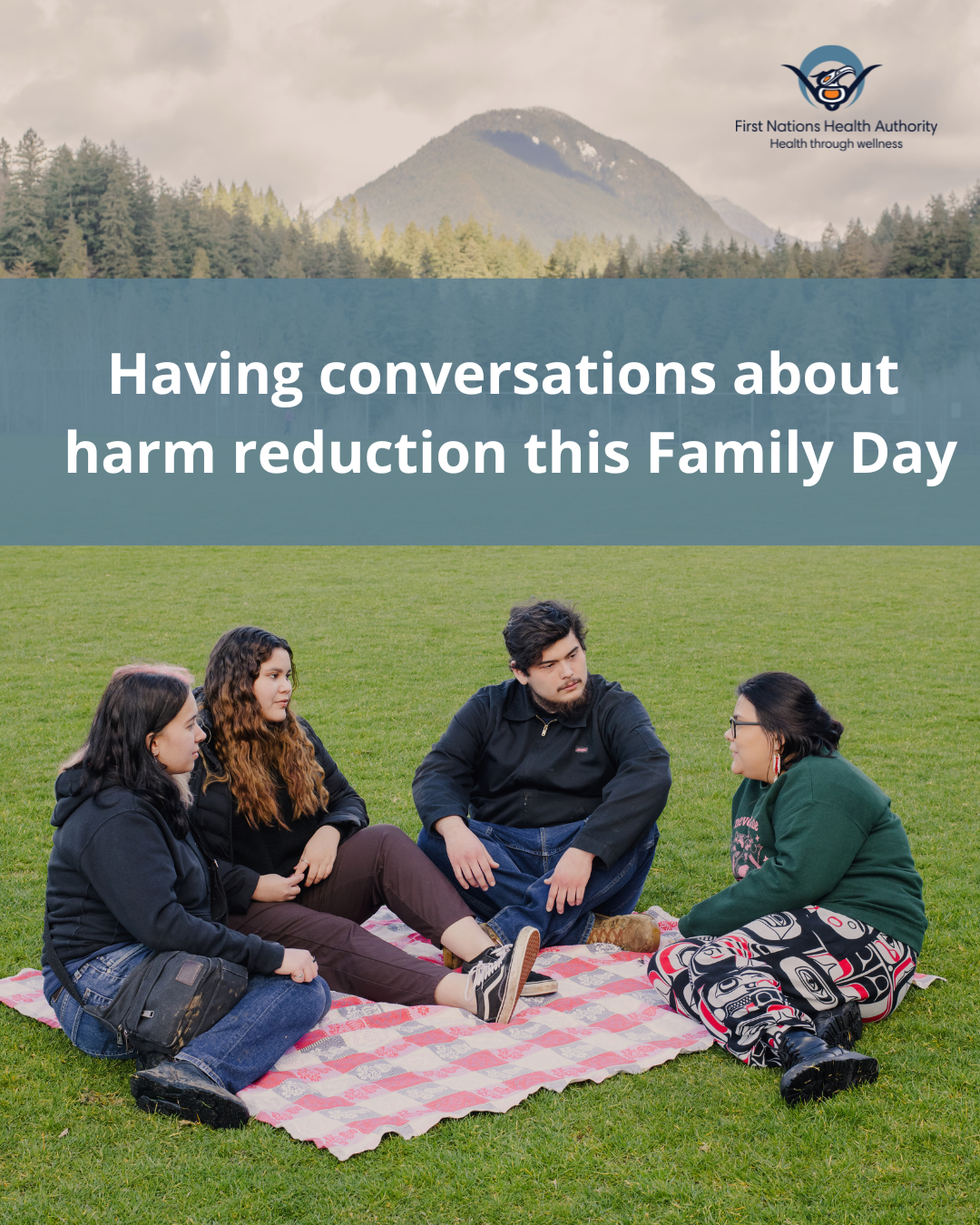
Family Day (February 16) is about connecting with our families, communities and each other. It can also be an opportunity to have honest conversations about harm reduction and the toxic drug public health emergency that deeply affects our communities.
Hayley Skaar, who was a member of FNHA's Youth Advisory Committee, which supported the development of 'With Open Arms', says that intergenerational conversations about harm reduction eased her feelings of shame surrounding substance use.
“I realize the Elders in my family taught me teachings and wisdom, often in the form of stories, that were told to me when the timing felt right," says Hayley. “I found myself making more intentional choices in my daily life."
The 'With Open Arms' toolkit supports families and friends to have courageous conversations about substance use, harm reduction, and healing. These conversations are an important step toward support and connection, even if they may feel uncomfortable at first.
"We can overcome what we're going through," she says. “It's in telling the story that we see who we really are… and who we are still becoming."
The toolkit acknowledges that there is no single path to wellness and explores First Nations–centred harm reduction—an approach rooted in respect, love, and compassion. It recognizes the importance of meeting people where they are on their wellness journey which may include a spectrum ranging from continued substance use to recovery. FNHA's harm reduction approaches are guided by First Nations knowledge and teachings. Community-led harm reduction programs that create space for everyone and include ancestral knowledge systems helps people to connect, address intergenerational trauma and supports collective healing – whether they use substances or not.
Kaitlyn McMahon-White, Youth Wellness Liaison for Vancouver Island Region, travels to communities to encourage and support youth on their health and wellness journey. This includes offering harm reduction workshops or hosting events that encourage community connection and healing.
“A lot of people experience feelings of disconnection, and I think First Nations-centered harm reduction allows us to reconnect with family, community, land, culture."
Kaitlyn goes on to share, “In our communities, we have shifted to a place where we can hold space for these conversations and hold space for people who may be experiencing substance use disorder and just let them know that we are here for you. It's beautiful to see."
Hayley says that when family and friends hold us up when we struggle, we can gain strength to continue on our wellness journey.
Intergenerational healing and connection are so important to our wellness journey and we can all work to build our own circle of support. Knowing who to lean on can make a meaningful difference in finding ways to use substances more safely and to reduce related harms. Your supports can be anyone that you choose—friends, family, Elders, health workers or someone who understands what you're going through. Strong community and intergenerational connections are supportive ways to practice harm reduction that is rooted in culture, healing and belonging.
We are all on our own health and wellness journey, and we hope that you spend your Family Day honouring and connecting with yourself and your loved ones.
If you or your loved ones are looking for further resources, please see the following:
'With Open Arms' toolkit
'With Open Arms' videos
Harm Reduction and the Toxic Drug Crisis
Culturally Safe and Trauma-Informed Cultural Services