Spring caucus participants shared community-driven approaches to combatting the toxic drug crisis
Health leaders from 14 First Nations communities along BC's South and Central Coast and in the Southern Stl'atl'imx region are highlighting community-driven responses to the toxic drug crisis, with a focus on culture and recovery.
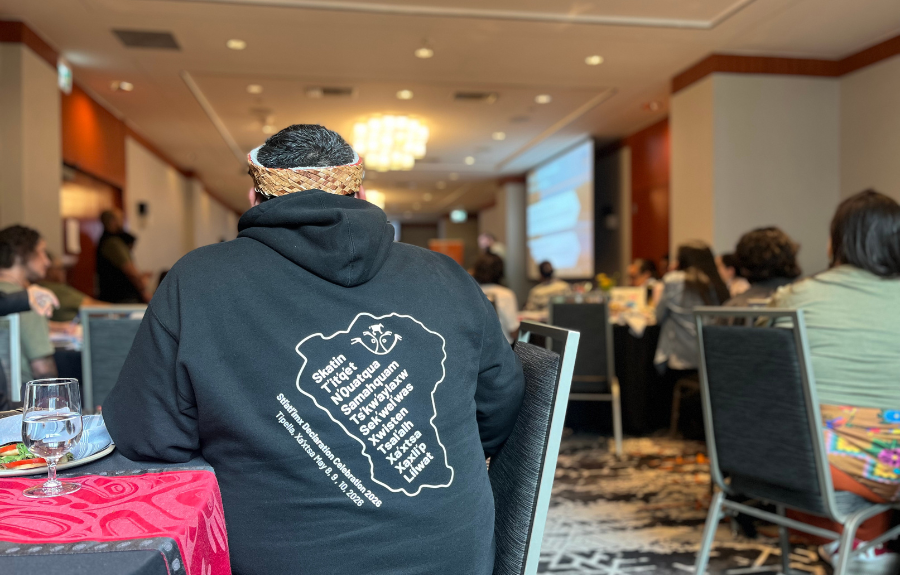
The Vancouver Coastal Regional Spring Caucus, held May 20–21, brought together community and FNHA leaders in Vancouver to share successes and challenges, while recognizing health care workers responding to the toxic drug crisis.
“We hear the distress from community members at this caucus and other caucuses that have happened," said Dr. Nel Wieman, FNHA's Chief Medical Officer “We have deliberately chosen to focus on the resilience of First Nations people that often arises from culture, ceremony and traditions, and focus on hope."
Dr. Wieman pointed to an encouraging 33.3 per cent decrease in toxic drug related deaths among First Nations people in BC in 2025 compared with 2024 but stressed that stigma and gaps in care remain significant barriers to lowering those numbers further.
“Substance use is a chronic relapsing medical condition by nature," she said. “When we think about those horrible racist tropes that the mainstream population has about First Nations people who struggle with substance use, how difficult the stigma must be to overcome and seek help."
Dr. Wieman also shared her lived experience as a Sixties Scoop survivor and someone 11 years into recovery. She welcomed the idea of more community-driven solutions that are grounded in culture.
The St'át'imc Chiefs Council declared a state of local emergency in July 2025 across all 11 St'atl'imx communities after rising deaths linked to the toxic drug crisis. The region, notably around Lillooet, has reported the second-highest rate of toxic drug deaths in BC, with First Nations people disproportionately impacted.
Xa'xtsa (Douglas) First Nation Chief Don Harris said his community responded by taking action against trafficking.
“The drug dealers were openly selling in our community," he said. “They would have a duffle bag with a variety of different drugs, seeing who could afford what. We took a stand against it."
Chief Harris says his community worked with law enforcement partners to remove known drug dealers and is now focused on supporting community members in accessing treatment, healing and employment opportunities.
“Some of those members that were dabbling in the drugs are now dabbling in work," he said.
FNHA recognizes that connection to culture is foundational to the health and wellness of First Nations people. These principles guide the harm reduction programs and services we offer in partnership with communities. Learn more about our support services for mental health and substance use.
Other topics covered at the Spring caucus included engagement updates from the First Nations Health Council (FNHC) leading up to Gathering Wisdom XIV in Fall 2027. FNHA provided updates on social determinants of health and health benefits.
A wise community practices session featured the Tla'amin Nation asserting sovereignty over oral health.
Regional caucuses are held across the province as part of FNHA's ongoing engagement pathway with First Nations in BC to gather input, guidance and build consensus on key decisions. FNHA raises our hands to the 14 First Nations for participating in another successful Spring Vancouver Coastal Regional Caucus.